
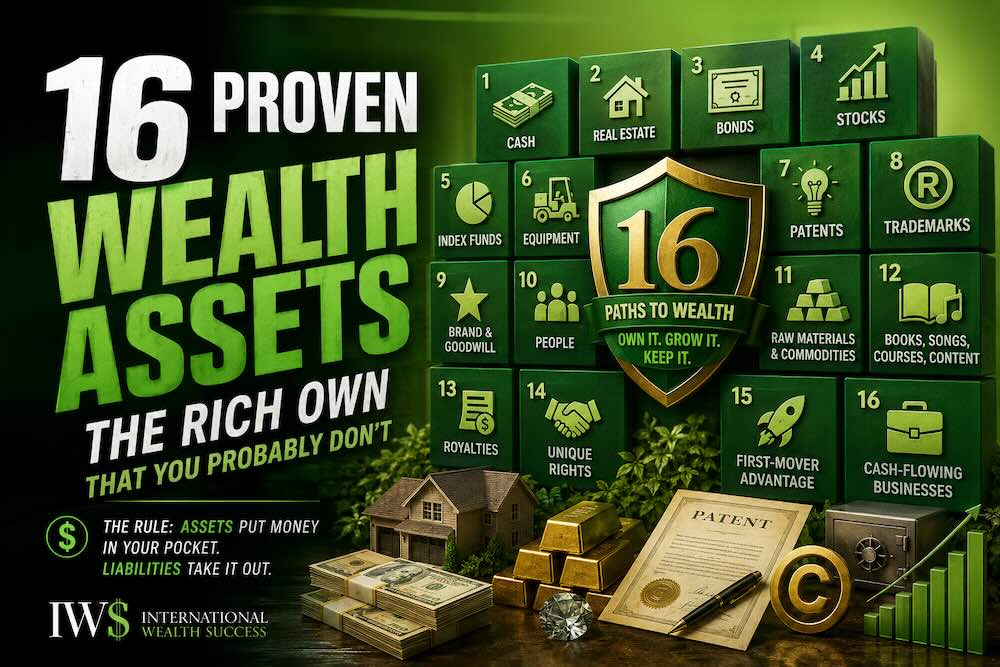
The rich play a different game. While most people scramble for paychecks and income, they own assets — they own cash-producing real estate, valuable businesses, stocks, bonds, trademarks, patents, royalties, books, songs, brands, customer lists, rights, contracts, equipment, and advantages that keep producing income long after the first work has been done.
That is the great distinction: Income makes a living. Assets make a fortune.
A person can work hard for forty years and still end up dependent on the next paycheck. Another person can acquire one small rental property, one profitable business, one royalty-producing book, one trademarked product line, one specialized directory, one piece of equipment, one valuable list, or one licensing right and begin building a financial machine.
This is the lesson Tyler G. Hicks taught again and again through International Wealth Success. The road to wealth is paved with ownership. You look for opportunities. You use OPM — Other People’s Money — when possible. You acquire, control, finance, broker, lease, license, publish, resell, improve, and multiply assets.
The public thinks wealth comes from salary. The wealthy understand that salary is the starting fuel. Assets are the engine.
Modern business valuation proves the point. Ocean Tomo has reported that intangible assets now account for roughly 90% of S&P 500 market value, a dramatic shift from the old economy of factories, inventory, and physical plant. McKinsey has likewise emphasized that companies able to deploy intangible assets effectively are positioned to outperform.
That means the modern wealth-builder must think beyond cash in the bank. Cash matters. Real estate matters. Stocks and bonds matter. Yet the great fortunes of today are also built from
- brands
- rights
- content
- formulas
- systems
- contracts
- data
- distribution
- reputation
- access
Here are 16 proven wealth assets, what makes each valuable, and how an enterprising person can begin acquiring them.
1. Cash
Cash is the first asset because it gives you optionality. Cash lets you move when others hesitate. It lets you buy inventory at a discount, place a deposit on a property, purchase a small business, secure a domain name, print a catalog, run an advertisement, hire help, buy equipment, or survive a temporary reverse.
Cash by itself may lose purchasing power over time, yet cash in the hands of an alert wealth-builder is ammunition. Tyler G. Hicks repeatedly taught readers to seek opportunity, negotiate terms, use leverage intelligently, and move quickly when a good deal appears. Cash helps you do that.
A person begins building cash by creating a surplus. That may come from a side business, consulting work, brokering transactions, selling information products, liquidating unused possessions, collecting receivables, or cutting wasteful spending. The goal is to build an opportunity fund.
IW$ readers should think of cash as “deal money.” It is the reserve that allows you to act.
2. Real Estate
Real estate is one of the classic wealth assets because it can produce income, appreciate, provide collateral, shelter a business, and create tax advantages when handled properly.
The key is to distinguish between property that serves you and property that pays you. A personal residence may build equity over time, yet an income-producing rental, commercial building, storage facility, small apartment house, mobile home park, or excess-land parcel can become a true cash-flow asset.
A beginner can acquire real estate through many paths. You can house-hack a small multi-unit property. You can buy a distressed property with seller financing. You can lease property and sublease it for a spread. You can control property through options. You can broker real estate deals before owning property yourself. You can partner with someone who has cash while you bring the deal, management, or improvement plan.
This is pure Tyler G. Hicks territory. Find the seller with a problem. Find the overlooked value. Use terms. Use OPM. Make the property pay for itself.
3. Bonds
Bonds are debt instruments. When you own a bond, you are generally lending money to a government, municipality, or corporation in exchange for interest and return of principal according to the bond terms.
For the wealth-builder, bonds can provide income, stability, and capital preservation. They can also be bought through individual bonds, bond funds, Treasury securities, municipal bonds, corporate bonds, or ETFs. The SEC describes mutual funds and ETFs as pooled investment vehicles managed to hold portfolios of securities, including stocks and bonds.
Bonds are acquired through brokerage accounts, TreasuryDirect for U.S. government securities, retirement accounts, and professionally managed funds. A practical beginner can start by learning the difference between short-term bonds, long-term bonds, bond funds, municipal bonds, corporate bonds, and Treasuries.
The IW$ angle is simple: bonds may become part of your capital base. They may generate income while you hunt for larger opportunities.
4. Stocks
Stocks represent ownership in businesses. That is the point many beginners miss. A stock certificate or brokerage account position is a claim on a business enterprise. When you buy shares of a company, you own a small piece of its future profits, assets, management ability, brand power, and competitive advantage.
Stocks can pay dividends, appreciate in value, split, merge, or become part of larger compounding strategies. They are acquired through brokerage accounts, retirement plans, dividend reinvestment plans, and direct stock purchase programs.
The Tyler Hicks-minded buyer should study businesses as businesses.
- What does the company sell?
- Does it have pricing power?
- Does it own trademarks, patents, distribution, recurring revenue, brand loyalty, or market position?
- Does it throw off cash?
Stocks are paper ownership, yet ownership all the same.
5. Index Funds
Index funds and index ETFs allow a person to own a broad basket of stocks or bonds through one vehicle. For many people, this is the simplest path to broad market ownership. Instead of trying to select individual winners, an index fund follows a market index such as the S&P 500, total U.S. stock market, international stock market, or bond market. The SEC explains that mutual funds and ETFs pool investor money and invest in portfolios of securities.
A beginner can acquire index funds through a brokerage account, IRA, Roth IRA, SEP IRA, solo 401(k), or workplace retirement plan. The practical method is steady accumulation: invest a fixed amount each month, reinvest dividends, and allow compounding to work.
Index funds should be viewed as one layer of wealth. They are useful, accessible, and efficient. The greater IW$ ambition, however, is to combine passive ownership with active opportunity: businesses, real estate, rights, royalties, and deal-making.
6. Equipment
Equipment becomes an asset when it helps produce income. A truck, trailer, camera, printer, commercial kitchen appliance, vending machine, skid steer, embroidery machine, carpet cleaner, pressure washer, 3D printer, forklift, or piece of shop equipment can become the foundation of a business.
The important test is production. Does the equipment help you earn fees, rent it out, fulfill orders, reduce costs, or increase capacity?
A person can acquire equipment with cash, leases, seller financing, equipment loans, used-equipment auctions, business liquidation sales, partnerships, or revenue-share arrangements. One of the most IW$-style approaches is to find equipment sitting idle and negotiate the right to use it, rent it, broker it, or operate it for a share of revenue.
Equipment is especially powerful because it can turn labor into billable service. A $1,500 machine can become a $75-an-hour business. A used trailer can become a delivery service. A camera can become a product-photography studio. A commercial printer can become a local business-services operation.
7. Patents
A patent is a legal right connected to an invention. It can protect a process, machine, manufactured item, composition, or improvement, depending on the type of patent and the governing law.
Patents are intangible assets. Investopedia describes intangible assets as nonphysical resources such as patents and trademarks that provide economic benefits and competitive advantages.
A person can acquire patent value in several ways. You can invent and file. You can license someone else’s patent. You can buy unused patents from inventors or companies. You can form a venture around a patented improvement. You can broker patent licensing deals. You can create content, directories, or consulting services around patented technologies in a niche market.
The IW$ method is to avoid sitting around waiting for a lightning bolt. Look for problems. Talk to business owners. Study products. Find inefficiencies. Then determine whether the idea can be protected, licensed, manufactured, sold, or assigned.
8. Trademarks
A trademark protects a brand identifier: a name, phrase, logo, symbol, or other source-identifying mark.
Trademarks can become enormously valuable because they attach customer recognition to a product, service, or company. A strong trademark can support premium pricing, licensing, franchising, merchandising, publishing, product extensions, and business sale value.
You can acquire trademarks by creating and registering your own marks, buying neglected marks, acquiring a business that owns valuable marks, licensing a mark from another owner, or building a product line around a distinctive name.
A good name matters. A product title matters. A series name matters. A business name matters. A trademark can become a wealth asset when it represents trust, recognition, and repeat purchasing.
9. Brand and Goodwill
Brand and goodwill are the economic value of reputation. A business with loyal customers, strong reviews, repeat orders, a respected name, and a clear market position is worth more than a pile of equipment and inventory. The “invisible” part of the business may be the most valuable part.
This is why small business acquisition can be so powerful. When you buy an existing business, you may acquire customers, phone numbers, web traffic, supplier relationships, trained employees, local reputation, contracts, reviews, recurring accounts, and market presence. The SBA recognizes buying an existing business or franchise as a distinct path into business ownership.
A beginner can build brand and goodwill through consistent service, strong guarantees, published authority, customer testimonials, community presence, direct mail, search visibility, email lists, and partnerships.
You can also buy goodwill. A tired owner may have spent twenty years building a reputation and may be ready to sell. That is where the IW$ acquisition mindset becomes invaluable.
10. People
People are among the greatest assets, though they should be understood correctly.
You do not own people. You build relationships, teams, networks, leadership, distribution, advisory circles, referral sources, and alliances.
A skilled salesperson, reliable operations manager, trusted bookkeeper, talented designer, experienced deal scout, lender contact, real estate broker, attorney, accountant, editor, contractor, or industry insider can produce more value than a machine.
The wealthy acquire human assets by becoming worth knowing. They make offers. They build trust. They pay fairly. They share upside. They connect people. They follow up. They maintain lists. They create networks.
This is one of the deepest IW$ lessons: Access matters. A person with access to lenders, sellers, buyers, brokers, manufacturers, importers, landlords, investors, and skilled operators can create deals that a solitary person never sees.
11. Raw Materials and Commodities
Raw materials and commodities include gold, silver, oil, timber, farmland crops, metals, chemicals, coffee, cotton, grain, lumber, and other basic inputs. These assets matter because every economy runs on inputs. Someone owns the land, mineral rights, inventory, contracts, storage, futures exposure, supply relationships, or distribution channels.
A beginner can acquire commodity exposure through commodity ETFs, shares in commodity-producing companies, physical metals, timberland funds, farmland partnerships, inventory-based businesses, or niche trading operations.
The IW$ opportunity is often found in the middle.
- You may not own an oil field, yet you can broker supplies.
- You may not own timberland, yet you can create a service business around lumber, pallets, salvage, or specialty wood.
- You may not own a mine, yet you can buy and resell scrap metal.
Commodities reward practical intelligence.
12. Books, Songs, Courses, and Content
A book, song, course, manual, directory, newsletter, video library, audio program, or training system can become a durable asset. Mariah Carey’s “All I Want for Christmas Is You,” released in 1994, remains the famous example because it continues to generate major annual royalties decades later. Estimates vary, yet recent reports place the annual royalty figure in the millions.
The same principle applies at smaller scale. A technical manual can sell for years. A niche course can bring in recurring customers. A directory can be updated and resold. A newsletter can build a list. A book can lead to consulting, speaking, licensing, translation rights, bulk sales, and related products.
This is central to IW$. Tyler G. Hicks built wealth through information: books, kits, directories, manuals, methods, and deal intelligence. The modern reader can do the same with print books, ebooks, PDFs, online courses, audio programs, private newsletters, paid reports, and specialized databases.
The best content assets solve expensive problems.
13. Royalties
Royalties are payments received for the use of an asset. They can come from books, music, patents, trademarks, mineral rights, franchises, software, photography, illustrations, licensing agreements, character rights, product formulas, and educational programs.
Royalties are powerful because they separate effort from repeated payment. You create, acquire, or control the asset once, then receive income each time it is used, sold, licensed, performed, downloaded, streamed, printed, manufactured, or distributed.
A person can acquire royalties by writing books, publishing authors, licensing music, buying royalty streams, investing in mineral interests, licensing trademarks, creating software, selling stock photography, or negotiating royalty participation in a product.
Ask one question: “What can I create or control that others will pay to use again and again?”
14. Unique Rights
Unique rights are special privileges, contracts, licenses, territories, options, permits, distribution agreements, media rights, publishing rights, domain names, mineral rights, franchise territories, import rights, or exclusive sales rights.
These rights can be extraordinarily valuable because they create control.
A person with the exclusive right to sell a product in a region owns an opportunity. A publisher with rights to a valuable manuscript owns an opportunity. A businessperson with an option to buy land controls an opportunity. A distributor with a protected territory owns an opportunity. A domain owner with the exact name buyers type into search owns an opportunity.
You can acquire unique rights by negotiating. That is the beautiful part. You may need imagination more than capital. Ask for exclusivity. Ask for a territory. Ask for an option. Ask for first refusal. Ask for publishing rights. Ask for translation rights. Ask for renewal rights. Ask for the right to resell, bundle, license, or promote.
Tyler G. Hicks would recognize this immediately: wealth often begins when you control something valuable before everyone else understands its value.
15. First-Mover Advantage
First-mover advantage is the head start gained by entering a market, niche, platform, trend, territory, or category early. It can produce brand recognition, search ranking, customer loyalty, supplier relationships, media attention, data, learning curve advantages, and distribution power.
A first mover can become the default choice.
A person can acquire first-mover advantage by watching neglected niches. Study new regulations, new technologies, new trade routes, new financing programs, new consumer behaviors, new marketplaces, new local development patterns, new AI tools, new publishing categories, new import/export needs, and new business services.
Move before the crowd. Publish the first practical guide. Build the first directory. Launch the first local service. Secure the domain. Contact the suppliers. Create the newsletter. Make the offer.
First-mover advantage belongs to the alert.
16. Cash-Flowing Businesses
A cash-flowing business is the master wealth asset because it can own and produce nearly every other asset: cash, equipment, real estate, trademarks, goodwill, people, inventory, contracts, customer lists, royalties, and unique rights.
A good business produces cash. A great business produces cash, grows in value, and creates additional assets along the way.
A person can start a business, buy a business, buy into a business, broker businesses, roll up small businesses, acquire a competitor, purchase a retiring owner’s company, or use seller financing and SBA-backed financing where appropriate. The SBA has specific guidance for buying existing businesses and franchises, and modern acquisition financing often involves a mix of buyer equity, seller financing, and lender financing.
This is exactly where IW$ books and kits become practical tools. The IW$ Guide to How to Buy a Business With No Money Down and the IW$ Business Acquisition & M&A Kit point the reader toward the central skill:
- find an owner with motivation
- find a business with cash flow
- structure the deal intelligently
- use terms
- use OPM
- make the business pay for its own purchase
A cash-flowing business can change a person’s entire financial life.
The Asset Test
Here is the practical test.
- Does it produce income?
- Can it be sold?
- Can it be borrowed against?
- Can it be licensed?
- Can it be improved?
- Can it be multiplied?
- Can it create access to greater opportunities?
A true wealth asset should pass at least one of these tests. The finest assets pass several.
A book can produce royalties, build reputation, generate leads, and become part of a course.
A business can produce cash, own equipment, employ people, control trademarks, and buy real estate.
A trademark can support licensing, product extensions, franchise development, and company value.
A piece of equipment can create service income, rental income, and resale value.
A relationship can lead to capital, deals, suppliers, customers, and introductions.
A unique right can create an income stream before a physical asset ever changes hands.
This is the way wealth compounds.
How to Begin This Year
Start with one asset.
Choose the asset that fits your temperament, resources, and present position.
If you have cash, begin building an opportunity fund.
If you have knowledge, write a guide, course, newsletter, or paid report.
If you have sales ability, broker deals.
If you have local knowledge, look for real estate or small business opportunities.
If you have technical skill, create intellectual property.
If you have contacts, build a network and become a connector.
If you have ambition and limited capital, study OPM, seller financing, licensing, options, brokering, and acquisition methods.
The central idea is simple: move from earning to owning.
That is the IW$ path.
Build cash. Acquire control. Create rights. Own content. Develop brands. Use OPM. Buy cash flow. Build goodwill. Multiply access. Convert knowledge into property. Convert property into income. Convert income into more assets.
That is how a person moves from working for money to making money work for him.
And that is why the rich own these assets.
They understand that wealth is built by ownership.
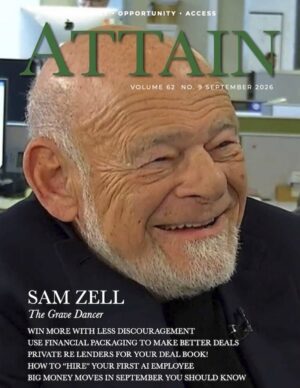
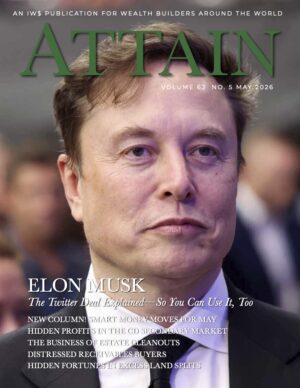
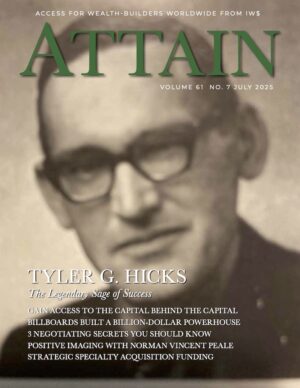

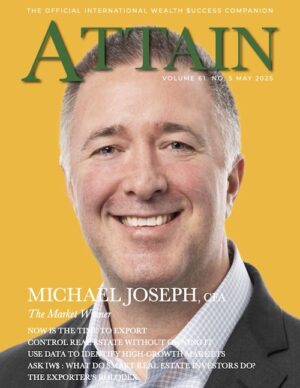
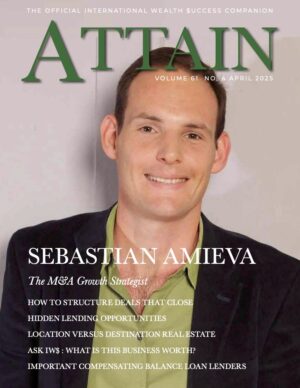
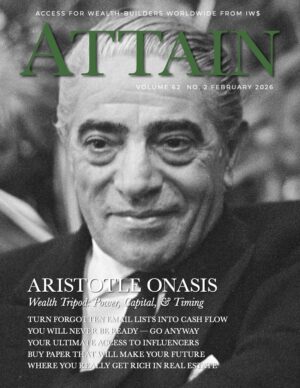

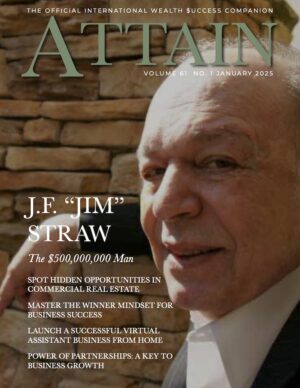



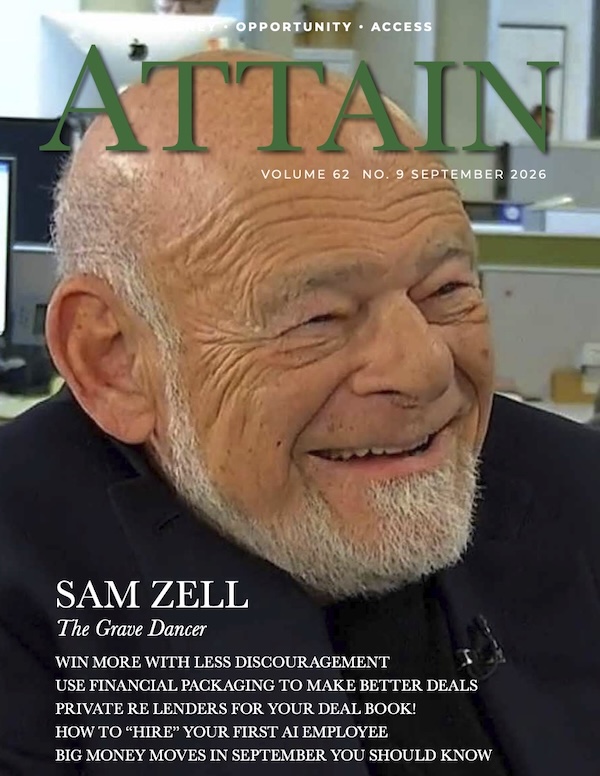
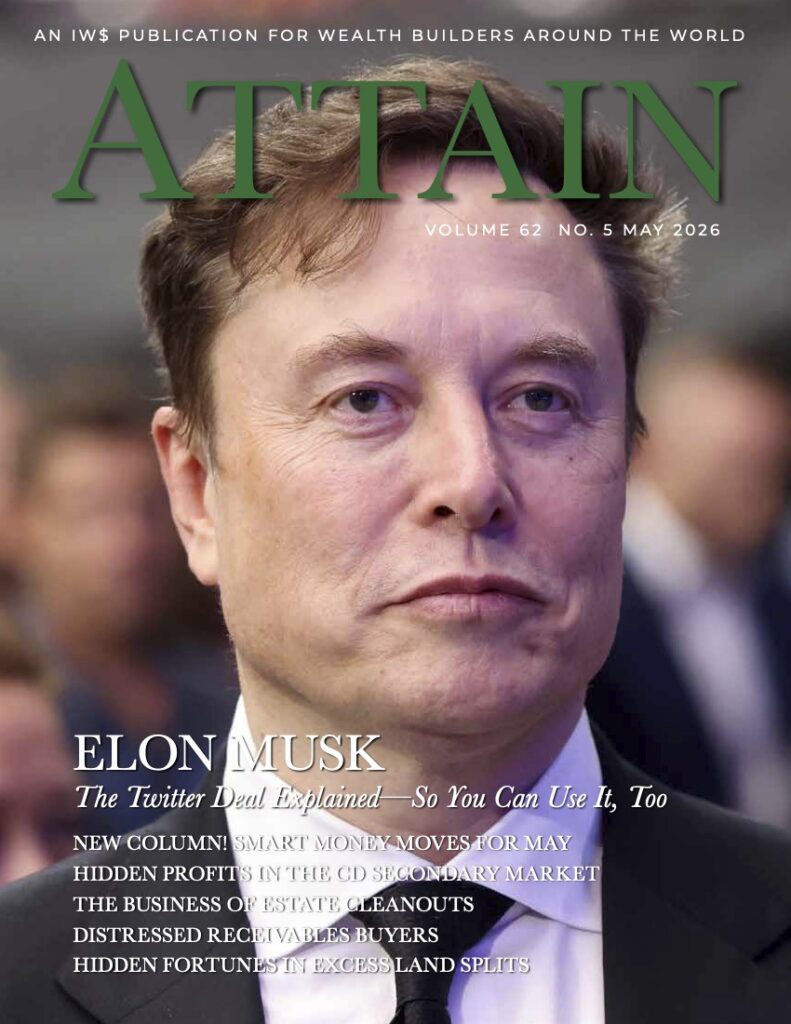
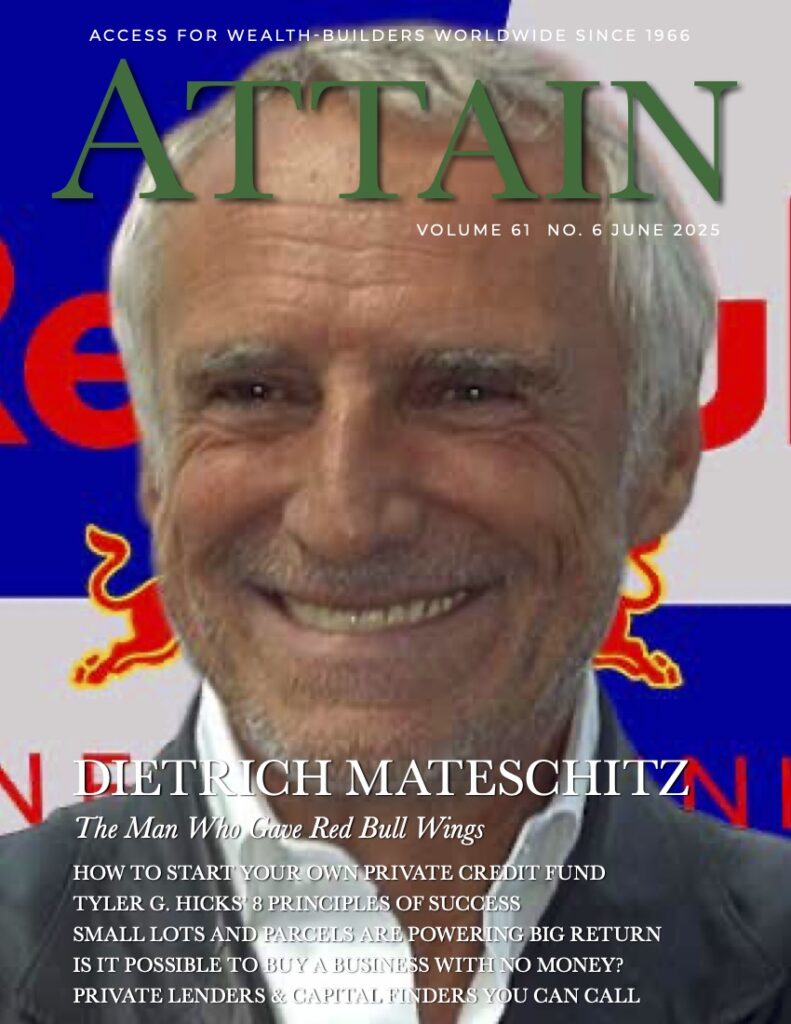
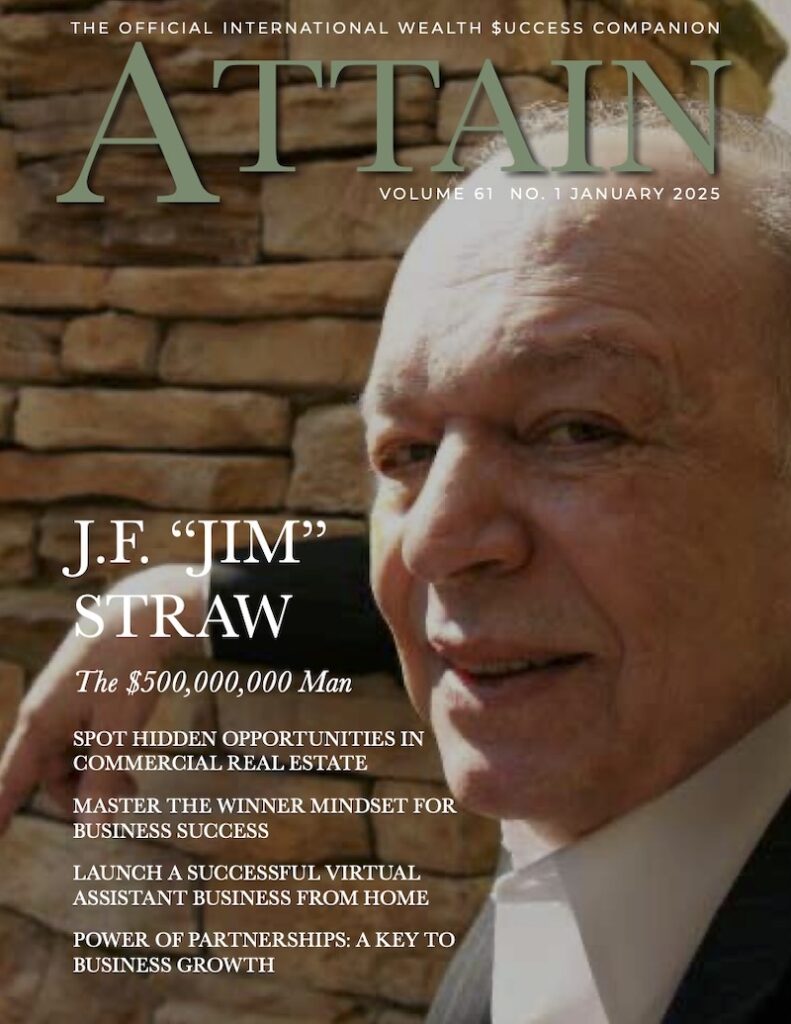

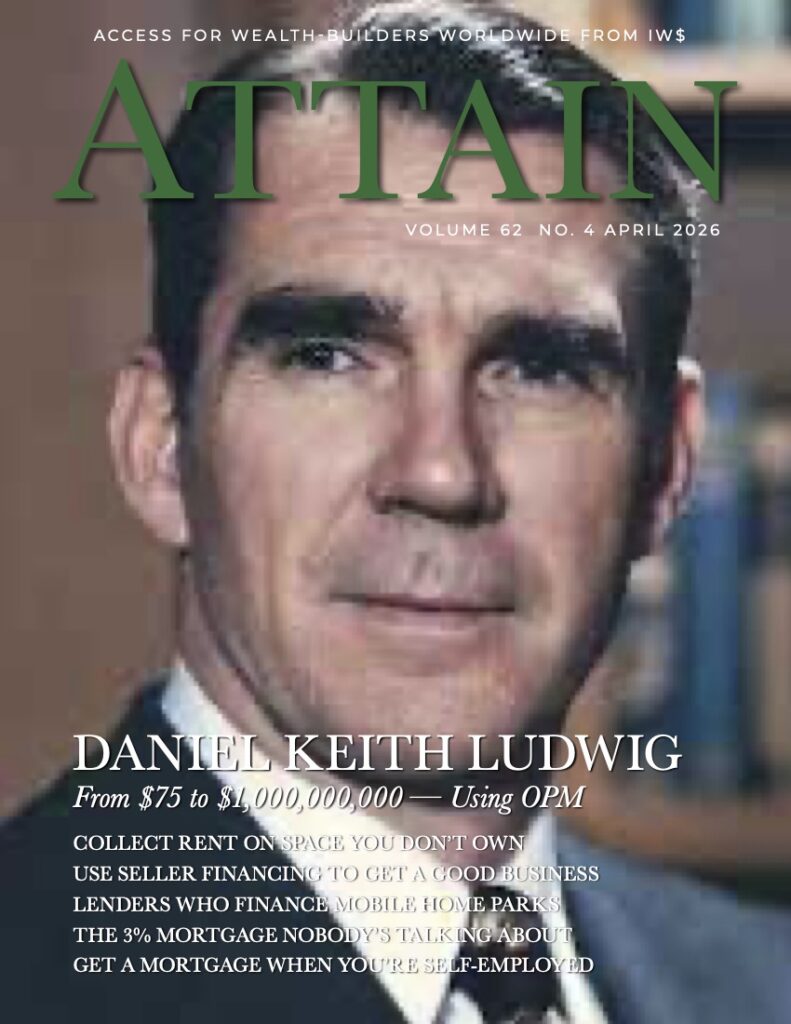
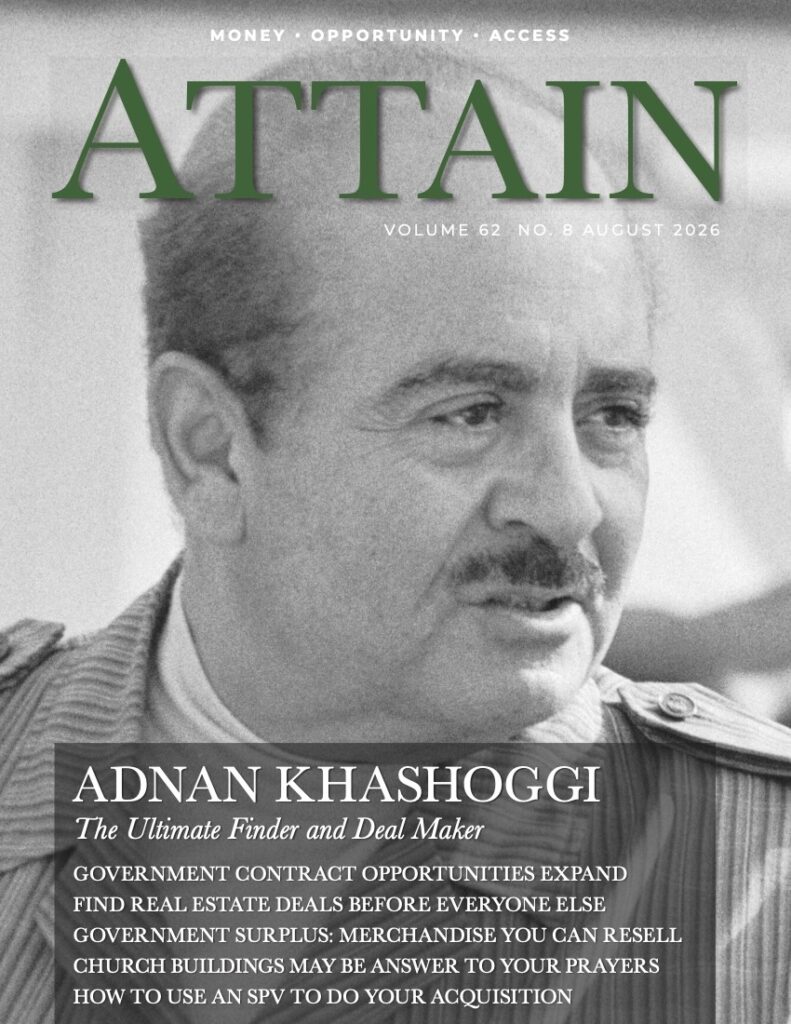

ATTAIN : The Magazine for Wealth-Builders Worldwide Since 1966
ATTAIN : Access for Wealth-Builders Worldwide Since 1966, formerly simply called the IW$ Newsletter, has been published monthly since 1966, is your trusted guide to building wealth and achieving financial freedom. Each issue delivers 16+ pages of actionable insights, including:
- Money-making ideas for part-time ventures, real businesses, and franchises.
- Funding sources like lenders, government grants, and real estate financing tips.
- Export-import trade leads, mail-order opportunities, and cosigner listings.
Subscribers also receive a FREE classified ad in every issue, reaching an international audience of entrepreneurs and investors—perfect for finding partners, funding, or selling products.
ATTAIN will inspire and empower you every month.
If you can dream it, IWS will show you how!