
Most people were never taught how wealth is really built. Instead they were taught and told a steady stream of misinformation.
Do any of these sound familiar?
They were taught to save slowly.
They were taught to admire caution.
They were taught to treat borrowing as something slightly shameful, slightly dangerous, slightly beneath the respectable person.
They were taught to believe that the fellow who pays cash for everything is the wise one, while the man who borrows is somehow reckless.
These ideas became so enmeshed in common thought that Tyler G. Hicks spent much of his writing life smashing that timid little mythology to pieces.
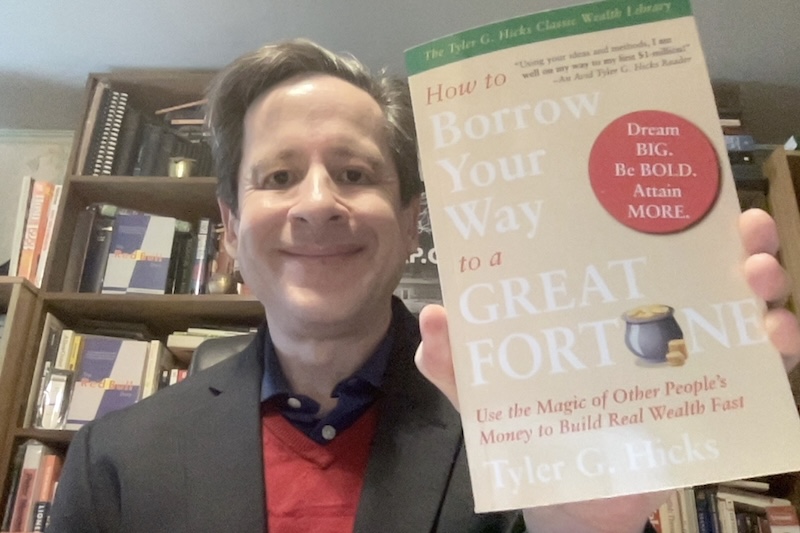
In How to Borrow Your Way to a Great Fortune, one of the most exciting volumes in the Tyler G. Hicks Classic Wealth Library, Hicks returns to a principle that runs through so much of his work:
Money is fuel, and the person who learns how to access it, direct it, and put it to profitable use has a tremendous advantage over the person who waits and waits and waits until he has enough of his own.
To be clear, that does not mean foolish borrowing. It means intelligent borrowing. It means productive borrowing. It means understanding that leverage, properly used, can compress time, expand opportunity, and put a determined person far ahead of the crowd.
Here, then, are eight destructive lies about borrowing that have kept far too many people small for far too long.
1. “All borrowing is bad.”
This is the first lie, and it is the lie from which many others flow.
All borrowing is not the same. Borrowing to finance an asset that produces income is one thing. Borrowing to buy a depreciating toy, fund a weak habit, or cover careless living is another.
The words may be similar. The result is not.
The wealthy have always understood this distinction. They borrow for businesses. They borrow for inventory. They borrow for machinery. They borrow for real estate. They borrow to acquire control of opportunities that can earn more than the cost of the money.
That is the whole point: A loan that helps you create income is different from a loan that drains income.
Tyler G. Hicks understood this deeply. Across practically the whole Tyler G. Hicks oeuvre, borrowing appears again and again as a tool of expansion, movement, and advancement. He did not worship debt — not at all! — rather he respected capital! He understood that capital in motion can do marvelous things when a serious person takes command of it.
A simple way to think about it is this:
- Consumer borrowing often buys comfort
- Productive borrowing buys capacity
- Wealth-building borrowing buys leverage
- Leverage buys speed and scale
That is why the blanket statement “all borrowing is bad” has kept so many people from ever entering the real game and should be put to rest if you wish to build a fortune.
2. “You should wait until you can pay cash.”
This sounds prudent. It sounds noble. It sounds disciplined.
It is also one of the great engines of delay.
Imagine a man who waits ten years to save enough cash to buy a business asset that could have been earning for him the whole time. Imagine a woman who waits until every dollar is neatly accumulated before she moves on an excellent opportunity that could have changed her life. While they are waiting, someone else borrows, acquires, operates, expands, and builds.
Who moves ahead faster? The answer is obvious.
In How to Borrow Your Way to a Great Fortune, Hicks returns repeatedly to the central advantage of OPM—Other People’s Money: it helps you move now. That matters because good opportunities do not always sit politely on the shelf while you gather yourself. Often they belong to the person who can act.
Cash has its place. Reserve has its place. Prudence has its place.
Yet wealth often belongs to the person who can say, “I see the opportunity. I know how to finance it. I am ready to move.”
Waiting can become a habit. And habits become destiny.
3. “Borrowing is only for desperate people.”
This is another deeply damaging falsehood.
Desperate people borrow, yes. So do ambitious people. So do builders. So do acquirers. So do developers. So do serious operators. So do many of the largest companies in the world.
Borrowing is not a mark of failure. Very often it is a mark of intention.
The man with no aim drifts. The man with a real aim seeks resources. Sometimes his own cash is part of that picture. Very often outside capital is a larger part of it.
That is why Hicks’s books carry so much voltage. He writes for the person who wants more and is willing to do more. He writes for the person who is ready to approach capital as something usable rather than mysterious.
The timid mind says, “I hope somehow, someday, I will have enough.”
The wealth-building mind says, “What is the opportunity? What capital is required? What structure will let me get there?”
That is a very different mentality — and mentality matters.
4. “The wealthy use only their own money.”
This lie has done a shocking amount of damage.
They do not. They simply do not.
They use a cornucopia of financial tools to build wealth —
- banks
- investors
- credit lines
- mortgages
- seller financing
- stock
- notes
- institutions
- partnerships
- every sensible and lawful method available to control more than their immediate cash would allow
This is one of the great themes pulsing through How to Borrow Your Way to a Great Fortune. Hicks keeps showing the reader that leverage is not exotic. It is not reserved for a secret priesthood. It is not available only to some distant titan in a tower. It is a principle. It can be understood. It can be studied. It can be applied.
The names change across generations. The principle does not.
Conrad Hilton built with credit.
Walt Disney used outside money.
J. Paul Getty understood leverage.
Real estate men have used debt for generations.
Business buyers have used financing structures for generations.
The world of wealth is filled with examples of people who used money they did not personally earn dollar by dollar before they acted.
That is not scandalous. That is finance.
5. “Banks do not want to lend to people like you.”
This is one of the most poisonous little beliefs a person can carry.
Of course lenders have standards. Of course they evaluate risk. Of course they prefer orderly borrowers to chaotic ones.
Yet banks, lenders, credit unions, finance companies, factors, and capital sources exist for a reason: to place money.
That does not mean they place it blindly. It does mean that money is not hiding from you in fear. It is looking for structure, confidence, clarity, repayment, and opportunity.
One of the things Hicks does so well is strip away the mystical fog around lenders. He reminds the reader that bankers are people. Lending institutions are businesses. Capital is meant to be used. The prepared borrower has a far better chance than the frightened one because the prepared borrower speaks the language of the deal.
Here are four qualities lenders love:
- Clear purpose
- Credible repayment path
- Professional presentation
- Evidence of seriousness
This is one reason the Tyler G. Hicks Classic Wealth Library remains so useful. These books teach ordinary readers to think and present themselves in ways that make capital more accessible.
Money responds to structure.
6. “A loan is a burden, never a tool.”
A loan can be a burden.
A hammer can break a window.
The question is not whether a tool can be misused. The question is whether it can build.
A loan used poorly becomes weight. A loan used well becomes lift.
That is one of the most important distinctions in all business.
Suppose borrowed money helps you acquire equipment that increases output. Suppose it helps you buy a profitable small business. Suppose it helps you secure inventory you can sell at a strong margin. Suppose it helps you control a property whose income more than covers the debt service and leaves real money in your hand.
In such cases, what is the loan?
It is not merely a bill. It is an instrument of expansion.
Hicks understood this so vividly that his writing still crackles with possibility. He wanted the reader to see that money, once understood, could become action. Action could become control. Control could become income. Income could become further borrowing power. And that, in turn, could become growth.
That is why the book is so energizing. It keeps taking the reader away from small, cramped thinking and into the larger strategic view.
7. “Small borrowers have no real access to capital.”
This is the lie that keeps many people from ever beginning.
They imagine that unless they are already rich, already connected, already institutional, already polished to a dazzling sheen, the world of capital is closed to them.
It is not.
The beginning borrower may start with
- a personal loan
- a line of credit
- a small business loan
- collateral
- seller terms
- a local program
- a state-backed opportunity
- a federal source
- a modest relationship that grows stronger over time
Small beginnings are not a disqualification. Often they are simply the first rung.
This is one of the exhilarating things about Hicks’s work. He always writes with a sense of upward movement. He never leaves the reader crouched in the dust, admiring money from afar. He keeps handing the reader one ladder after another.
And that is exactly how many fortunes begin: with a small win, then a larger one, then another, then another.
A few useful truths belong here:
- Small capital can establish credibility
- Credibility can lead to larger access
- Larger access can lead to better deals
- Better deals can build real momentum
That is not fantasy. That is progression.
8. “You need to be rich before leverage can help you.”
This final lie is the cruelest of all because it tells the ambitious person that the tool he most needs belongs only to someone who already has what he wants.
Hicks spent much of his career rebelling against that exact idea.
The Beginning Wealth Builder is not shut out of the game. He simply has to learn the game. He has to study borrowing. He has to understand structure. He has to recognize good opportunities. He has to know the difference between productive debt and foolish debt. He has to grow in confidence, skill, and presentation.
That is why books like How to Borrow Your Way to a Great Fortune matter so much. They take ideas often associated with high finance and bring them into practical reach. They show the reader that leverage begins as a way of thinking long before it becomes a large transaction.
The first great shift is mental.
You stop asking, “How will I ever afford this?”
You begin asking, “How can this be financed intelligently?”
That question alone can change a life.
The Truth Hicks Wanted You to See
Borrowing is not the enemy.
- Ignorance is the enemy.
- Timidity is the enemy.
- Confusion is the enemy.
- Passive drift is the enemy.
Borrowing, wisely used, is one of the great engines of business growth and wealth creation. Tyler G. Hicks understood that. It is one reason the Tyler G. Hicks Classic Wealth Library still feels alive, urgent, and charged with possibility.
The person who learns how capital works begins to see the world differently. He sees assets where others see price tags. He sees opportunity where others see obstacles. He sees structure where others see fog. Most of all, he sees that wealth is very often built by people who knew how to command more than their immediate cash.
That is not a minor lesson. That is one of the master lessons of wealth.
And that is the truth — plain and simple.
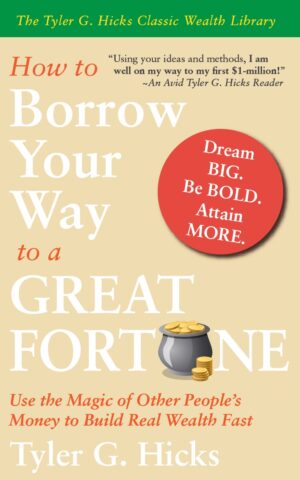
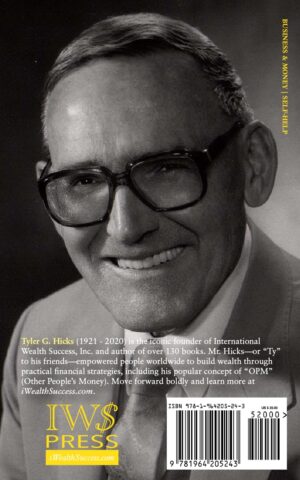
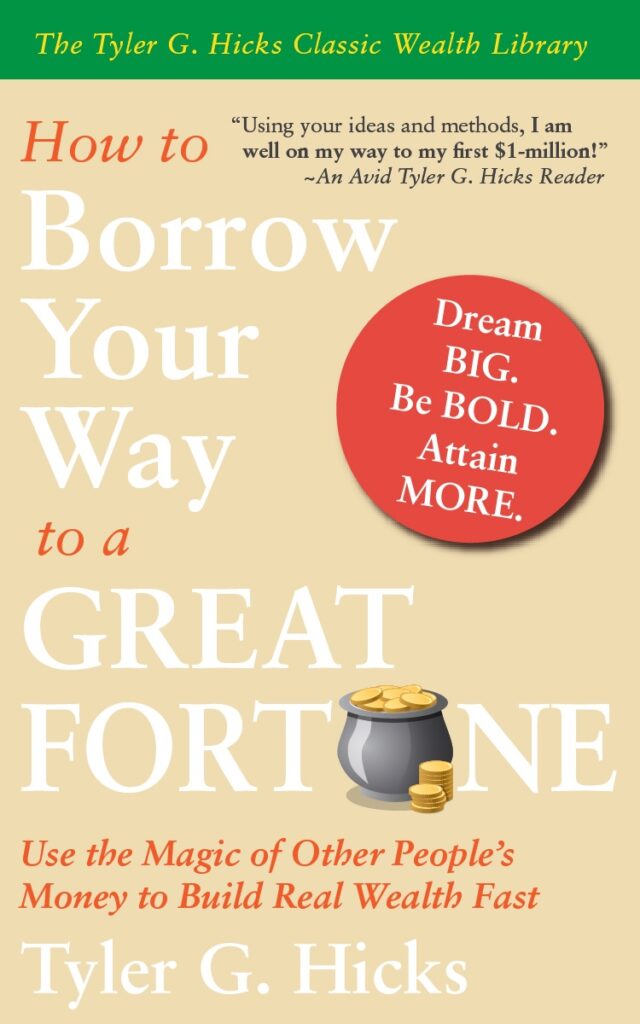
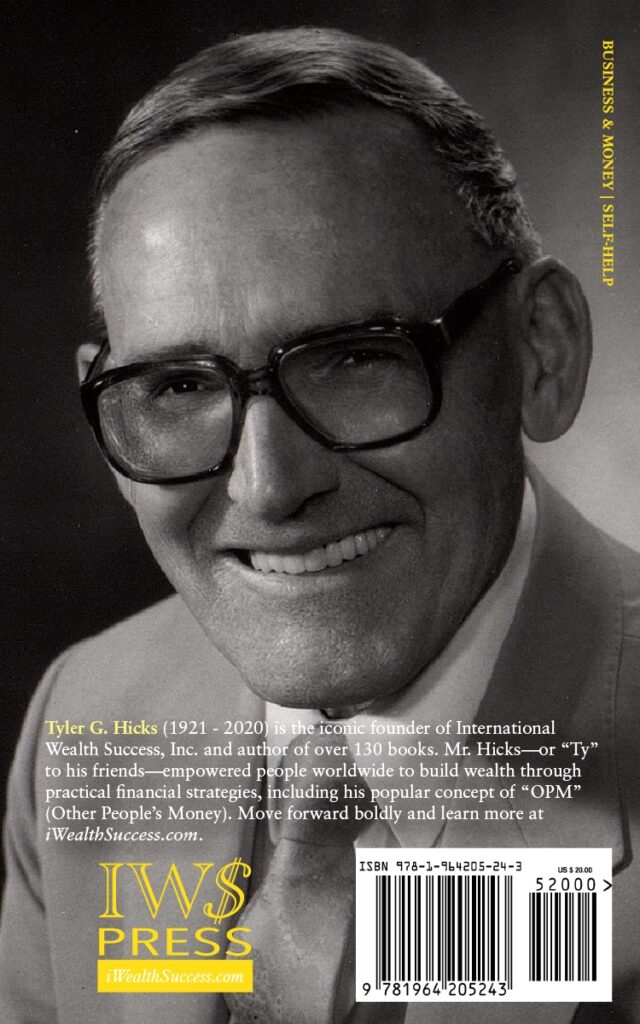
How to Borrow Your Way to a Great Fortune (IWS-63)
Use the Magic of Other People’s Money to Build Real Wealth Fast
These icons of industry knew a truth that the average person is never taught: Hard work alone will rarely make you wealthy, but leverage will. You can do the same. You only need the shrewdness to apply the methods laid out in this contemporary guide.