
Suppose a restaurant owner needs a commercial refrigerator. A new one costs more than she wants to spend. A used one might solve her problem, but she has no time to call dealers, search auctions, check dimensions, compare delivery charges, and arrange an inspection. What if you did the searching for her, for a fee?
You would not have to buy the refrigerator. You would not need a warehouse, a truck, or a store full of used equipment. You would sell the owner something she can use immediately: three carefully researched purchasing possibilities, with the real prices and unanswered questions laid out side by side.
That is the foundation of an equipment finder business. You find what a business needs and help the owner make contact with suitable sellers. And if you do the job well, you can repeat the process for other restaurants, workshops, contractors, farms, laundries, and manufacturers.
But here’s something I want you to remember before you begin: find a buyer with a real requirement before you spend your week hunting for machinery. A random collection of equipment advertisements has little value. A list of three suitable machines for a customer who is actively preparing to buy can be valuable indeed!
A $350 Equipment Search That Could Save a Buyer $2,450
Let’s work with an illustrative example, not an actual completed transaction. A business owner has budgeted $12,000 for a piece of replacement equipment, including ordinary delivery and installation. You find a used candidate at a dealer for $7,400. The buyer obtains a shipping quote of $800, an independent inspection quote of $450, and an installation quote of $550. The expected combined cost is $9,200.
Your agreed sourcing-report fee is $350. If the used machine actually meets the buyer’s requirements and those costs remain accurate, the buyer’s total becomes $9,550, leaving an illustrative $2,450 difference against the $12,000 budget. Your customer gets a useful buying decision; you receive $350 for a defined research service.
Don’t overlook the comparison’s limitations. The used machine could have a shorter remaining life, weaker warranty, higher power consumption, missing parts, or greater repair risk. You must compare the whole purchase, not merely the price printed in a listing. Your job is to find and organize evidence. The buyer and qualified inspectors decide whether to purchase.
Why is this especially worth investigating now? Specialized marketplaces already bring together sellers and buyers of used business equipment. Surplus Record lists machinery and electrical equipment, while its Wanteds board publishes buying requirements. Equipt aggregates equipment auction listings. These are places to begin your research, not guarantees about price or condition.
Step 1. Choose One Kind of Equipment and One Kind of Buyer
A beginning finder should not attempt to locate every machine ever invented. Choose one narrow market you can learn. Commercial kitchen equipment is a useful starting subject because restaurants and bakeries frequently need recognizable items. Other possibilities include used forklifts, pallet jacks, landscaping equipment, commercial laundry machines, printing equipment, and small workshop machines.
Now narrow your target again. Instead of saying, ‘I find used equipment,’ say, ‘I help independent restaurants locate replacement commercial refrigeration and food-preparation equipment.’ That tells an owner exactly what you do.
Your first assignment is to identify twenty businesses in your chosen category, using public business listings, industry directories, and referrals. Record the owner’s name where available, the business’s public telephone number, and what equipment it appears to use. Do not assume the equipment is broken or that the owner is ready to buy. You are preparing a list of people who might need your service.
Step 2. Sell the Search Before You Start Searching
This is the step that makes the idea commercial. A restaurant might spend $15,000 on a new oven without ever asking whether someone can find a good used one. You are going to offer the search before the owner commits to purchasing.
Hello! I help restaurant owners compare used commercial equipment before they spend money on a replacement. For a fixed fee, I research three serious candidates and show you the asking prices, delivery costs, seller details, and questions an inspector should answer. Are you planning to replace any equipment in the next sixty days?
What if the owner says, ‘I’m not buying anything right now’? Then ask one more useful question: ‘Which machine would you want to replace first if it failed tomorrow?’ Write down the answer and, with permission, follow up later.
I would try a $249 starter package for a three-seller desk-research report on ordinary equipment, or $350 for a more demanding search requiring additional supplier calls. These are proposed starting prices to test, not published industry averages. Offer a clear scope and deadline, and have the customer approve the fee before you work.
Why not promise to make the purchase happen? Because a beginner does not control sellers’ inventories, shipping, inspections, financing, or the buyer’s eventual decision. Promise the work you can perform: a researched shortlist and honest comparison.
Step 3. Get the Six Facts That Turn a Search Into an Order
If the buyer says yes, begin with a one-page equipment requirement sheet. Without it, you can waste two days researching the wrong model.
- What, exactly? Record the category, brand preferences, model or compatible alternatives, and required capacity or dimensions.
- Where will it work? Record the installation address, available doorways, electrical service, fuel, ventilation, and any restrictions. Have the buyer or a qualified technician verify technical specifications.
- How soon? Establish the true deadline, not merely ‘as soon as possible.’
- How much? Establish the maximum all-in budget, not just the sticker price.
- What condition is acceptable? Ask whether refurbished, as-is, inspected, or warrantied equipment is acceptable.
- Who approves the purchase? Find out whether the owner, partner, purchasing manager, or lender must approve it.
Here is the first secret of good finding: what the buyer must have matters more than what the seller hopes to sell. Get those six facts in writing.
Step 4. Build Your Supplier List in One Afternoon
Your next job is to locate actual sources of the specified equipment. Use used-equipment dealers, specialized trade marketplaces, equipment manufacturers’ approved resale channels where available, local auctioneers, and businesses replacing or closing out equipment.
Start with four research sources:
- Surplus Record for industrial machinery and equipment listings, buying guides, and seller information.
- Equipt for current equipment auctions and possible specialist sellers.
- AllSurplus for commercial surplus categories.
- Local industry suppliers, auction companies, and equipment dealers found through ordinary public business directories.
Make a supplier sheet with company name, actual contact, equipment type, location, shipping possibilities, and what the seller has confirmed. Aim to identify ten plausible sources before narrowing your report to three. Listings change. A photograph is not proof that the equipment is still available.
An owner looking for commercial refrigeration probably does not care that you found an attractive piece of machinery three states away. She cares whether it fits, works, can be moved safely, and can arrive before her old equipment fails. Those are the questions you must investigate.
Step 5. Use AI to Research Faster, but Verify Every Fact
AI can save you time preparing supplier questions, organizing model requirements, and comparing written quotes. It must not invent a seller, machine, price, specification, inspection result, or delivery promise. For a beginning finder, one false claim can cost the entire business relationship.
Use this prompt after the customer has approved the requirement sheet:
AI PROMPT 1: EQUIPMENT RESEARCH ASSISTANT
You are my commercial equipment sourcing assistant. My customer’s requirements are: [paste requirements]. Create a checklist of essential specifications, a list of exact questions I must ask each seller, and a comparison table with columns for model, seller, location, asking price, condition, warranty, freight, installation, inspection, and total expected cost. Do not invent inventory, product specifications, prices, or seller claims. Mark all unknown values ‘TO VERIFY.’
Then use a second prompt after the dealers have replied:
AI PROMPT 2: QUOTE COMPARISON
Compare the following three actual seller quotations against these buyer requirements: [paste approved requirements and quoted details]. Calculate the known all-in totals and identify missing expenses, incompatibilities, repair risks, and questions for an independent inspector. Separate confirmed facts from seller statements and unknown information. Do not select a ‘winner’ until all required specifications are verified.
You can do this in a spreadsheet if you prefer. The money is in the judgment and the follow-through, not in the cleverness of the software.
Step 6. Compare the Whole Price, Not the Advertised Price
A machine advertised for $6,500 may be more expensive than one offered for $7,500. How? The cheaper machine may need expensive freight, a special electrical connection, replacement parts, or a lifting crew. The more expensive one may be local, tested, and ready to use.
Use this simple formula for each candidate:
True estimated acquisition cost = asking price + buyer’s premium or transaction fees + taxes + freight + rigging or removal + inspection + installation + immediate repairs.
Ask the seller for the serial number, written condition description, maintenance records, included accessories, demonstration or inspection availability, ownership documentation, payment terms, return rules, and pickup requirements. Never claim a machine is safe or suitable for installation based on your own reading of an online listing.
Ritchie Bros.’ equipment buying guidance recommends arranging inspection or sending someone qualified, and it reminds buyers to understand the equipment before bidding. Its discussion of auction fees is another reason the headline price is only the start. Surplus Record’s buying guides give equipment-specific questions worth adding to your research sheet.
Step 7. Deliver a Report the Customer Can Actually Use
Do not send three bare hyperlinks and call that your service. Your paid report should contain a one-page summary, three candidate descriptions, estimated total costs, seller contact information, source dates, inspection questions, and a clear list of remaining unknowns.
Give each candidate the same treatment. Include its strengths, limitations, known fees, delivery constraints, and whatever warranties are actually documented. Add a separate section called ‘Before You Buy’ so the buyer knows what requires confirmation. You are providing research and coordination, not a mechanical inspection, valuation, safety certification, or purchasing guarantee.
My suggested report cover reads:
Replacement Equipment Search for [Business Name]
Three candidates for [required machine]
Requirements confirmed: [date]
Inventory and prices checked: [date]
Prepared by: [your name]
Purpose: preliminary purchasing research, subject to seller confirmation and independent inspection.
Send the PDF, review it with the customer in a twenty-minute call, and ask which seller the customer wants to contact. If the customer wishes, make the introduction with the customer’s authorization.
Step 8. Get Paid Without Taking Ownership of the Equipment
The simplest beginning arrangement is a clearly priced service contract. The buyer pays you for an equipment-search report and a defined amount of research time. You are not taking the buyer’s purchase money, reselling a machine, holding a deposit, or promising that an auction bid will succeed.
For example, if you perform four $249 searches in one month, the gross service revenue is $996. At ten searches it is $2,490. Subtract your actual research tools, insurance, taxes, and other business costs to understand what remains. Those numbers illustrate the arithmetic, not a prediction of sales.
Can you collect a percentage of a transaction instead? Sometimes. But a contingent finder fee or broker commission raises additional questions: the transaction type, your role in the negotiation, the laws in your state, the seller’s policies, and disclosure of compensation to the buyer. Get a written arrangement and legal advice about the activity before advertising or collecting that kind of fee. Do not secretly collect from both sides.
A fixed-fee search service is a good starting place precisely because it lets the customer evaluate the useful work you perform. Once you develop knowledge, contacts, and a reputation, you may find larger opportunities for lawful buyer representation, sourcing agreements, and repeat purchasing services.
Step 9. Build a Repeatable Finder Business
Here is where one small assignment becomes a genuine commercial operation. A restaurant that buys one machine today may replace another in six months. A regional bakery operator might have five locations. A small manufacturer may buy used equipment every quarter.
After completing the first search, ask: ‘Which equipment purchases are already in your budget for the next twelve months?’ Keep a simple calendar of approved follow-up dates. Create a checklist for your suppliers, quote comparisons, inspection referrals, and final client reports. Each successful search should make the next one faster.
If you later bring in help, delegate the preliminary research and data gathering while you maintain the customer relationships and quality controls. Build your own directory of specialist sellers. That directory becomes an asset your next customer cannot easily reproduce in an afternoon.
For a deeper study of the general finding business, I recommend The IWS Finder Fundamentals Master Guide (IWS-99). When you’re ready to study larger and more varied finding opportunities, examine The IWS Finder’s World Business Success Kit (K-37), which includes finding methods and sample agreements. Neither replaces legal or technical advice for your particular transaction.






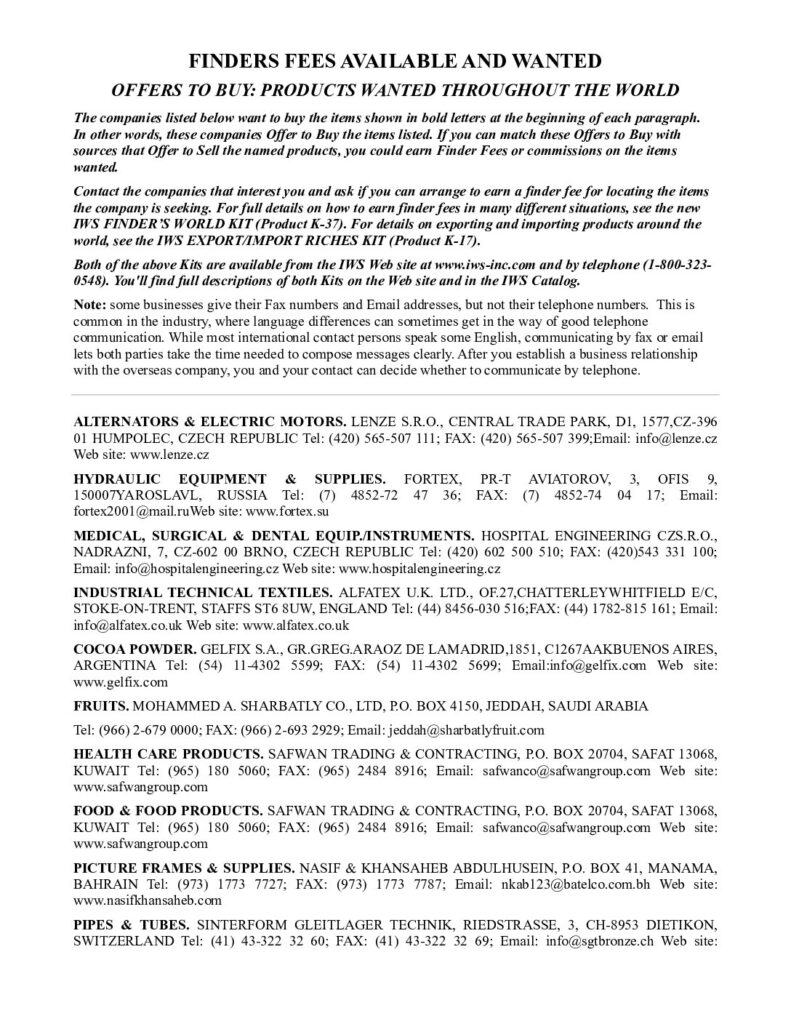
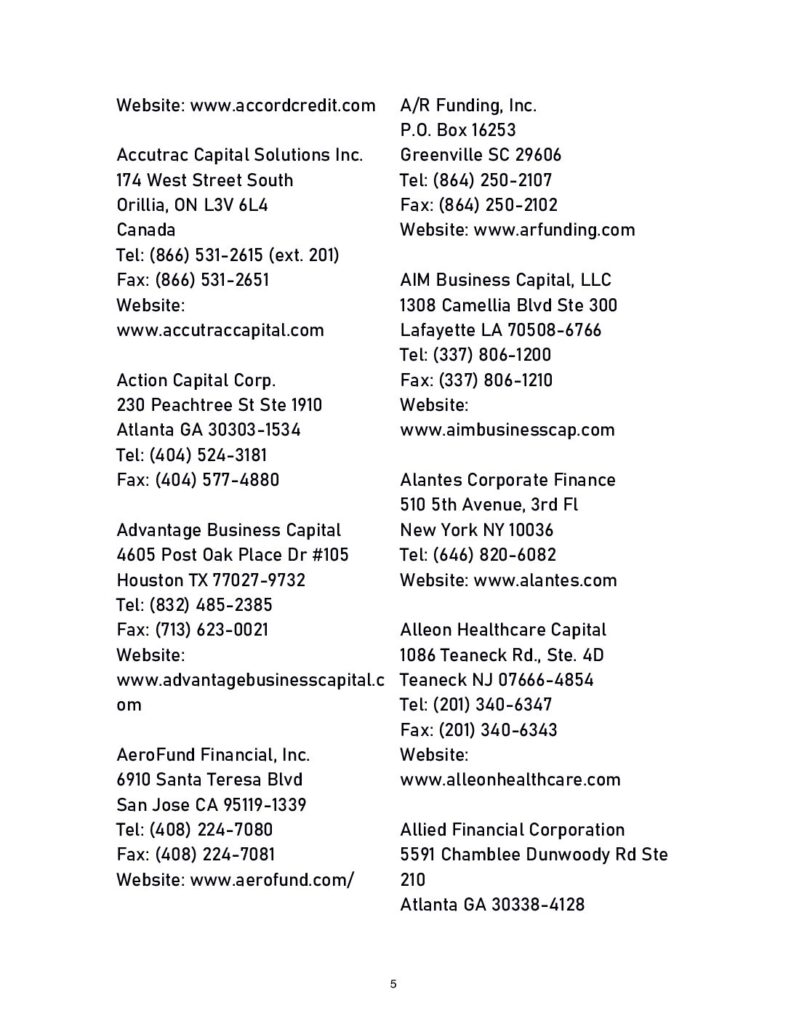
The IWS Finder’s World Business Success Kit (K-37)
Step into the high-profit world of Finder’s Fees with the IWS Finder’s World Business Success Kit. This massive training and resource package gives you the knowledge, contacts, and professional tools to earn fees by connecting people, money, and opportunities across dozens of industries. Inside, you’ll find step-by-step guidance, sample agreements, global lead directories, and proven strategies for spotting deals and closing them fast. With thousands of potential opportunities at your fingertips, you can build a flexible, home-based business that pays you every time you make the right connection. This kit puts you in the middle of lucrative deals worldwide and shows you how to collect big Finder’s Fees again and again.
A Buyer-First Script You Can Use Today
If I were starting this tomorrow morning, I would avoid building a website first. I would telephone fifteen businesses in one narrow category. I would want to learn whether any of them is currently seeking equipment.
Hi! I’m putting together a local equipment-sourcing service for independent [restaurants / shops / contractors]. When you need a replacement machine, I research used dealers and auctions and prepare a written three-option comparison with the true costs and the questions to check before purchase. Is there anything you are planning to replace this month, or would it be more useful if I checked back later?
Now suppose the owner asks, ‘Why should I pay you? I can search online myself.’ A fair question! Your answer is simple: ‘You certainly can. My service is for owners who would rather spend their time running their business. I call the sellers, confirm what I can, identify the extra costs, and give you a report you can use to make the decision. You approve the search and the fee before I start.’
Do you see the difference? You are not asking someone to pay you for a link. You are offering to take a specific purchasing chore off a busy person’s desk.
Your Seven-Day Assignment: Find One Real Equipment Buyer
- Day 1: Choose one equipment type and one customer category. Make a twenty-business prospect list.
- Day 2: Speak with ten prospective buyers. Ask what they expect to replace in the next sixty days.
- Day 3: Finish the remaining conversations. Choose one genuine requirement and obtain the buyer’s written specifications.
- Day 4: Offer the buyer a fixed-price three-source comparison. Get a signed scope and payment arrangement before starting.
- Day 5: Identify at least ten possible sources and verify the most promising listings by telephone or email.
- Day 6: Build the side-by-side cost and risk comparison. Flag unknowns and recommend independent inspection where needed.
- Day 7: Deliver the agreed report, collect any remaining payment, and ask for permission to follow up about the next equipment requirement.
Some weeks you may discover no immediate buyer. That is information, not defeat. Revise the category, the offer, or the businesses you call. Learn which kinds of machines are bought frequently, which sellers respond promptly, and which businesses value your research. The SBA’s market-research guidance is useful when deciding which local customer group to pursue.
You do not need to own a forklift to help a warehouse manager locate one. You do not need to own a restaurant to research a refrigerator. You need to identify a real requirement, organize useful information, and deliver the service you promised.
Start today. Pick one type of machine. Write the names of twenty possible buyers. Make your first five calls before you do anything else. Your first equipment-finding customer may be one conversation away!