

Did you ever think you could use real estate options to make a large profit from the AI data center boom without owning the land, building a data center, or buying a single computer?
You have heard about the money being spent on artificial intelligence. You have seen pictures of enormous buildings filled with powerful computers. You may even have thought, “That’s wonderful for the big technology companies. But where do I come in?”
Here is one answer you can put to work: find land that a serious data-center developer wants, obtain the right to buy it at a fixed price for a fixed period, then arrange to transfer that right to a qualified developer for a profit. The legal tool is a real estate purchase option. And it can give you control over property costing millions without first paying its full purchase price.
There is a catch, and it is the secret that makes the method worth studying. You must learn to recognize land that can actually serve a data center. An empty field next to a power line is only an empty field until the electric utility, land-use officials, and other people who matter have provided useful answers. Let’s see how to do this intelligently.
Why the AI Boom Has Created a New Kind of Real Estate Opportunity
A data center is a place where servers store, move, and process information. AI computing requires extraordinary electrical power and supporting infrastructure. According to JLL’s 2026 global data-center outlook, the industry could add nearly 100 gigawatts of capacity worldwide between 2026 and 2030, with total expenditures approaching $3 trillion when real estate, infrastructure, and tenant equipment are considered. That is a forecast, not money already spent, but it gives you an idea of the scale of the expansion.
So where does the real estate come in? Computers require buildings. Buildings require land. But the land must also have a realistic route to large amounts of dependable electricity, fiber-optic connections, suitable access, and legal permission to operate. In its 2026 U.S. data-center outlook, CBRE reported that power cost and delivery speed now outweigh connectivity in many large-scale site-selection decisions.
Here’s the point for you: the valuable thing may not be the acreage by itself. It may be the right acreage, in the right utility territory, with a realistic route to power, at the right time. Find such a site before others do, and you may have something a developer wants to buy.
How Real Estate Options Let You Control Land Before Buying It
Suppose an owner will sell 100 acres for $2 million. You cannot afford to purchase it, and you certainly cannot afford to build a data center. But suppose the owner agrees to give you the exclusive right to buy the land for $2 million during the next twelve months. In return, you pay a negotiated option fee of $25,000. The agreement also expressly permits you to assign the option to another buyer.
Now you control a contractual purchase right. You do not own the 100 acres, and you have no guaranteed profit. But while the option remains in force and its conditions are satisfied, the seller ordinarily must honor the written purchase terms. That gives you time to investigate the site and seek a qualified buyer or development partner.
Why might the seller agree? He receives money for granting you exclusivity and has a defined opportunity to sell at an agreed price. Why might a developer pay you for your position? Because you have assembled lawful site control, information, and perhaps a location the developer would otherwise have to spend time finding and negotiating.
Real estate options are hardly new. What is new is one possible use for them. Tyler G. Hicks taught this method in Option Wealth Opportunities: How to Make Big Money in Real Estate with Options (IWS-40). His central lesson was that you can sometimes profit from controlling the right to buy property rather than purchasing it outright. Today’s data-center demand gives that lesson a fresh application.



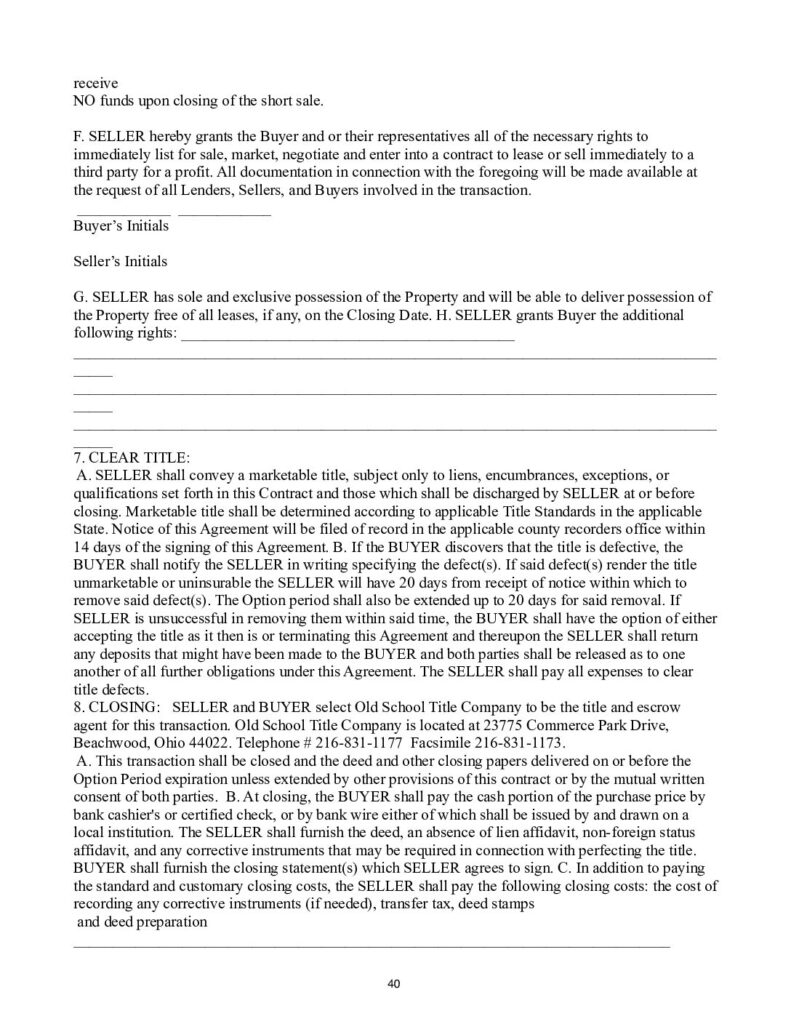
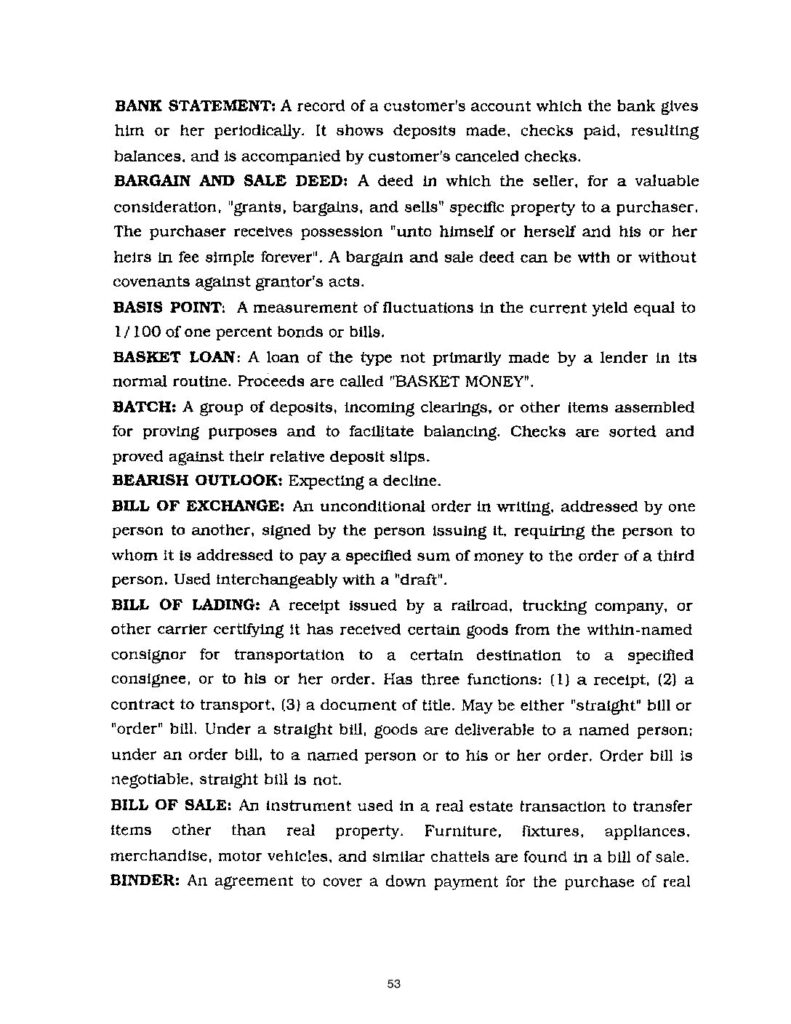
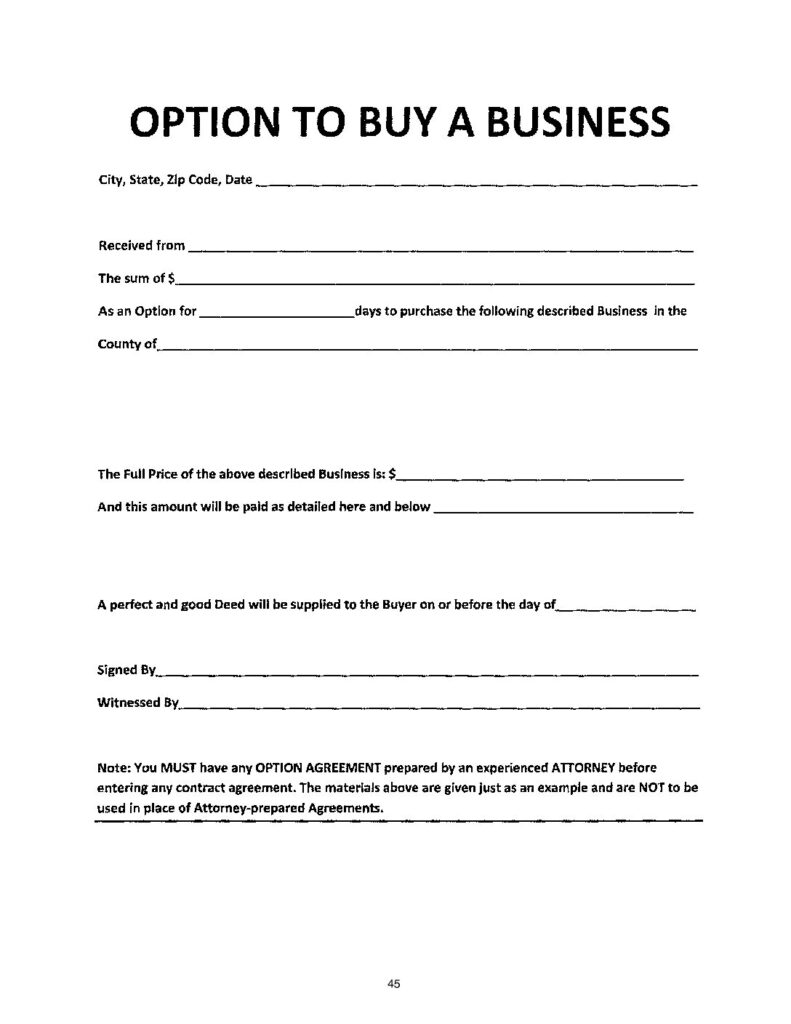

IWS-40 : Option Wealth Opportunities: How to Make Big Money in Real Estate with Options (An IWS Speed-Read Report)
Also known as How to Make Big Money in Real Estate Even Though You Do Not Own 1 Square Foot of Land or Buildings, this valuable report shows you how to build wealth in real estate using options to control desirable properties for little cash (sometimes as low as $1). You can sell, or lease, these properties for a profit, using options like those shown in the report. Gives step-by-step procedures, along with several examples of actual option documents.
A $135,000 Example: How the Numbers Could Work
Let’s use an illustrative deal, not a claim that an actual developer has agreed to these figures. You find a suitable 100-acre tract and negotiate the following terms:
- Agreed land purchase price: $2,000,000.
- Upfront option payment: $25,000, nonrefundable under this example but credited against the purchase price if exercised.
- Option term: 12 months, with a separately negotiated extension if needed.
- Your initial legal and screening expenses: $15,000.
- Hypothetical amount paid by a developer for your assignable option position: $175,000.
If a developer agrees to pay you $175,000 to take over the option, your simple arithmetic is $175,000 received, less $25,000 for the option, less $15,000 in expenses, leaving $135,000 before taxes and any additional costs. The developer then assumes the remaining duties under the transferred option and, if it exercises the right, pays the owner the balance of the stated purchase price. Because the $25,000 option fee was credited, the balance payable to the owner would be $1,975,000 under these assumed terms.
What is the developer really buying from you? A valid purchase right at a price it finds acceptable, together with the time and investigative work already invested in the site. A buyer might pay less, more, or nothing at all. The figures above illustrate the mechanics; they are not a market quote or a promised return.
And what if you cannot find a buyer and the option expires? You could lose your entire $25,000 option payment and the $15,000 spent on investigations, or $40,000 in this example. That is why we will use a buyer-first, power-first method rather than gamble on land that merely looks promising.
Step 1. Ask the Buyers What They Need Before You Look for Land
This is where I want you to start. Find companies that develop or acquire sites for data centers. They include specialist developers, colocation companies, real estate investment firms, and industrial land-development groups. Look for their real estate acquisition, development, or site-selection representatives. You can begin with industry firms and market reports, including the data-center teams at CBRE and JLL, and then identify the actual developers active in the counties you want to study.
Before you spend money on any option, ask five questions:
- Which states, counties, or electric-utility territories are you actively considering?
- What is the minimum usable acreage for the type of site you are seeking?
- How many megawatts of power do you require, and by what date must it be available?
- Which zoning, fiber, water, road, and environmental conditions are essential?
- Will you consider a site submitted by a third party who holds an assignable purchase option, and what evidence must accompany it?
Do not assume every developer needs the same thing. A large AI campus may require hundreds of acres and hundreds of megawatts. A smaller facility can have different requirements. Your job is to locate a specific buyer requirement and then look for land that might meet it.
I would build a one-page ‘buyer requirements’ sheet for each of ten developers. Within a few conversations you will begin to discover what the real buyers in your chosen market actually want. And that information is worth far more to you than guessing from a map.
Step 2. Find Land That Fits the Requirements
Now start your land search. Try industrial properties, underused manufacturing sites, larger rural tracts, old industrial parks, and neighboring parcels that might be assembled into one property. Use county property and tax records, the county’s GIS parcel map, commercial listings, industrial-development agencies, and conversations with local landowners and brokers. Search the utility territories and counties your potential buyers actually named.
Make a list of twenty candidates. For each, record the street or parcel location, owner, acreage, asking price if known, zoning classification, access roads, nearby industrial uses, and obvious obstacles. Do not contact an owner with grand claims about AI profits. First establish whether the property deserves a serious look.
Here is a useful rule: land near a transmission line is not necessarily land with available electrical capacity. A visible line, an existing substation, or a power plant nearby does not guarantee that a utility can deliver the megawatts a developer requires. The same is true of fiber: a home or business broadband map does not prove the availability of the redundant commercial fiber routes a data center may need.
Step 3. Eliminate Bad Sites Before Spending Serious Money
A successful option investor knows when to say no. Screen the twenty candidates and try to reduce them to three or four before paying lawyers, surveyors, or utility-study fees. Start with these seven checks:
- Power: Identify the electric utility and its process for a preliminary large-load inquiry. Seek information about capacity, deliverability, timing, upgrades, and study costs; don’t treat nearby wires as an answer.
- Zoning: Ask the township or county planning office whether data centers are allowed, require a special approval or rezoning, or face a moratorium.
- Buildable acreage: Separate total acres from acres usable after setbacks, slopes, stormwater areas, access roads, and utility corridors.
- Flooding: Start with FEMA’s Flood Map Service Center and investigate floodplain exposure.
- Wetlands and soil: Review the U.S. Fish and Wildlife Service’s Wetlands Mapper, then arrange appropriate professional investigation. Public maps are screening tools, not legal wetland determinations.
- Fiber and water: Identify likely commercial fiber carriers, redundant routes, water availability or cooling alternatives, and the rights needed to make connections. The FCC broadband map is only a preliminary clue, not proof of data-center connectivity.
- Title and community: Look for recorded easements, environmental problems, rights of way, neighborhood opposition, and anything else that could prevent construction.
The most important screen is often the hardest one: obtaining a credible utility answer. An engineer or experienced data-center site adviser may be necessary. Some utilities require an owner authorization, a formal application, deposits, or a long study period before they will provide dependable answers. Do not misrepresent a preliminary utility conversation as a guaranteed commitment of power.
Step 4. Negotiate an Option That Gives You Time and a Legal Exit
Once a qualified developer has shown interest in the general location and the preliminary screens justify proceeding, speak with the landowner. Your proposal is simple: you want to pay for an exclusive right to buy at an agreed price while you investigate a possible development. The owner keeps title during the option period. You take on the negotiated expense and risk of investigation.
A competent local real estate attorney should prepare the contract. I would insist on discussing the following items before signing:
- Exact land and purchase price: A legally sufficient description of the parcels and a fixed price or clear pricing formula.
- Option money: The amount, when it is paid, whether any part is refundable, and whether it is credited toward closing.
- Enough time: An initial period based on real utility and planning timelines, plus specific extension rights and extension prices.
- Assignment: Express permission to transfer your option to a qualified developer or partner, subject to any negotiated consent requirements.
- Access and investigation: Survey, title, environmental, engineering, and geotechnical entry rights, with insurance and property-restoration obligations.
- Utility cooperation: Owner signatures and permission for appropriate utility inquiries, applications, and easement discussions.
- Protection against surprises: Disclosures about liens and other interests, plus sensible provisions for title problems, unacceptable conditions, default, and termination.
- Closing mechanics: How and when the option is exercised, who closes, which deposits are credited, and how escrow handles any assignment.
Why is the assignment clause so important? Because you may want to make your profit by transferring your purchase right rather than buying the land. If your contract prohibits assignment, you could spend months finding a developer only to discover that you cannot transfer the very right you intended to sell.
And don’t assume a twelve-month option is always long enough. Large power projects can take years. The option period and extensions must fit the buyer’s actual process. A smaller investor should not take on an open-ended obligation to pay option fees and engineering costs without a defined limit.
Step 5. Turn Your Land Option Into a Credible Data Center Site
You have land under option. Now what? Put your energy into proving the things that matter to the buyer. The most valuable paper in your file may be a utility study showing how much power could be delivered, when it could be delivered, and what equipment or upgrades would be required. But do not spend large sums ordering studies without a developer or specialist who can judge the proposed load and technical requirements.
Create a concise site package with a parcel map, usable acreage, owner information, option purchase price and expiration date, zoning correspondence, road access, survey and title status, relevant floodplain and wetlands findings, utility contact and written findings, known fiber options, and any unresolved problems. State clearly what is confirmed, what is preliminary, and what remains unknown.
This is the difference between saying, ‘I have a hundred acres near a power plant,’ and saying, ‘I control a hundred-acre industrial site in a market you identified, and here are the utility, zoning, access, and title documents for your review.’ One is a hopeful sales pitch. The other gives a serious buyer something to investigate.
Step 6. Offer the Site to Qualified Developers, Not the Whole World
Return to the developers whose requirements you recorded in Step 1. Ask whether the site meets their first-pass criteria and who handles their real-estate acquisitions. Share a short nonconfidential summary first, then provide sensitive parcel or contractual information under an appropriate confidentiality arrangement when useful. Be truthful about your status: you hold an option, not the deed.
I am evaluating an approximately 100-acre site in [county and state] under an assignable purchase option. It is within the utility territory and general geographic area you identified. The attached one-page summary shows acreage, zoning status, access, and what we know so far about the power-study process. Would your acquisitions team consider reviewing it, and what additional proof would you need?
If the developer wants to investigate further, agree in writing on who pays for each new study, how information is shared, how long it has to act, and what happens if the developer declines. Do not let a potential buyer use up the remaining option period while you carry all the costs and risks.
Step 7. Make Your Profit Through an Assignment, Partnership, or Closing
You now have three possible ways to complete the transaction. Your choice depends on the agreement, the buyer, the property, and the money required.
- Assign the option: If the contract and local law permit, a developer pays you an agreed amount to take over your purchase rights, then completes its own purchase if it elects to exercise.
- Partner with the developer: You may contribute your contractual position to an appropriately documented joint venture in exchange for an agreed payment, interest, or share of proceeds. This can carry greater risk and longer delays.
- Exercise and resell: You purchase the land and then sell it. This generally requires much more financing, title work, closing expense, and exposure, and should be attempted only with a credible source of funds and a properly documented exit.
Use an experienced attorney and title or escrow professional to document the transfer and confirm the payment. Real estate licensing and wholesaling requirements differ by state, and the rules may apply when someone markets another party’s property or transfers a contract interest for compensation. Your lawyer must determine whether your proposed activity requires a real estate license, special disclosures, or a different transaction structure.
Remember the difference between an option and a sale. Until a buyer has committed and the documents are signed, your projected profit is only a possibility. Until the utility delivers an adequate answer, the site’s data-center usefulness is still a question. You make the idea work by resolving these questions one at a time.
Your First Ten Days: Put This Method to Work
You do not need a construction crew, a fleet of machines, or millions of dollars to begin investigating this idea. You need a telephone, a computer, time to study, and the discipline to discover what buyers will pay for before you spend meaningful money.
- Days 1–2: Choose one regional market. Find ten data-center developers or site-acquisition contacts active there and ask for their written site criteria.
- Days 3–4: Select the most promising criteria and collect twenty potential parcels from county records, industrial listings, and local contacts.
- Days 5–6: Run preliminary zoning, floodplain, wetlands, access, and utility-territory checks. Eliminate obviously unsuitable parcels.
- Days 7–8: Speak with the utility about its formal large-load inquiry process and contact the local planning office. Ask qualified developers which sites, if any, deserve further study.
- Days 9–10: Select one credible candidate, contact the owner, and discuss whether a properly priced option and investigation period might make sense. Before paying an option fee, review the numbers and proposed agreement with suitable professionals.
The Big Idea: Control the Right Land Before You Buy It
The AI boom has created demand for new buildings, enormous quantities of electricity, and locations capable of supplying both. You may never design a computer chip or operate a data center. But you can learn how the land business behind those facilities works, find property that matches a buyer’s requirements, and use a real estate option to control an opportunity while the essential facts are established.
That is why I want you to study Option Wealth Opportunities: How to Make Big Money in Real Estate with Options (IWS-40). The report explains buy options and lease options, shows how a person may control property without owning it, and includes examples of option documents. Learn the basic method there. Then apply it to modern opportunities with the technical and legal checks they require.
Here’s your assignment: make the first five developer calls this week. Ask what land they need. Write down the answers. Then begin looking. Your first profitable real estate option may begin with a question that costs nothing to ask!


